Before You Lace Up Your Boots: The Honest Truth About Hiking Grand Staircase-Escalante for the First Time
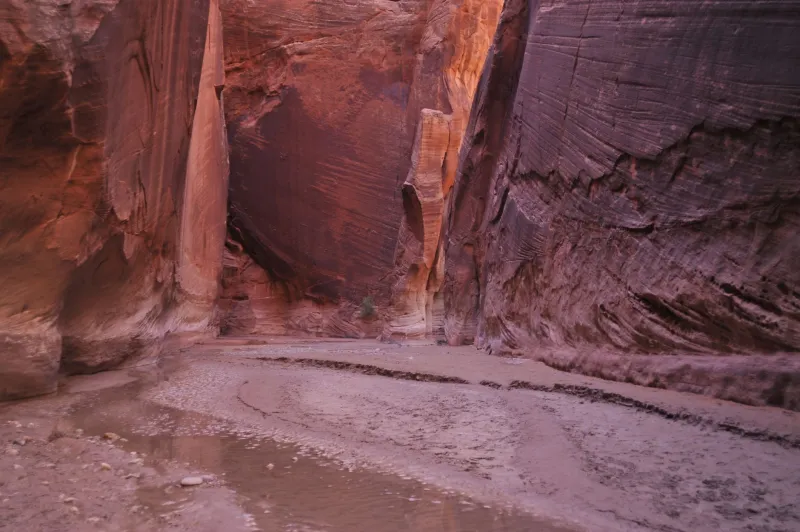
Let's be straight with you right off the bat: Grand Staircase-Escalante National Monument is not your average national park experience. There are no shuttle buses. There are no crowds nudging you along a well-worn path toward a predictable viewpoint. What there is — in breathtaking abundance — is raw, unfiltered canyon country that will test your navigation skills, your gear, your patience, and your sense of self in ways you probably didn't expect when you booked that Airbnb in Boulder, Utah.
That's not a warning to scare you off. It's an invitation to come prepared. Because when you get it right, hiking the Grand Staircase is the kind of experience that rewires your brain a little. The kind you'll be talking about for years.
Here's what no one really tells you before you show up.
The Trails Aren't Really Trails — And That's the Point
If you're used to hiking in places like Zion or Bryce Canyon, where the path is clearly marked and there's a ranger station every few miles, Grand Staircase-Escalante is going to feel like a completely different planet. Many of the most celebrated routes here — Coyote Gulch, The Peek-a-Boo and Spooky slot canyons, Death Hollow — are more like suggested directions than defined trails.
Route-finding in the canyons often means following dry creek beds, scrambling over sandstone ledges, and trusting your instincts when the GPS signal gets sketchy. Download offline maps through apps like Gaia GPS or CalTopo before you leave cell range, and don't rely solely on your phone. A printed topo map is old-school but genuinely useful out here.
First-timers often underestimate how disorienting slot canyons can be. Once you're inside a narrow sandstone corridor, everything looks the same. Mark your entry points and pay attention to the light. Getting turned around in a place like Spooky Gulch isn't just inconvenient — it can become dangerous, fast.
Flash Floods Are Not a Hypothetical
This is the part people nod along to and then kind of forget about. Flash floods in southern Utah are a genuine, year-round threat, and they can roll through a slot canyon without a single cloud in the sky above you. A thunderstorm fifteen miles away is enough to send a wall of water rushing through the very canyon you're standing in.
Before every hike, check weather conditions not just at the trailhead but across the entire watershed. The Bureau of Land Management (BLM) office in Kanab and the Escalante Interagency Visitor Center are your best resources for up-to-date conditions. Weather apps like Weather Underground can give you hyperlocal radar data that's worth checking obsessively during monsoon season (roughly July through September).
If you see clouds building, hear thunder, or notice the water in a wash turning murky or starting to rise — get to high ground immediately. No photo is worth it. No campsite is worth it.
Water: More Complicated Than You Think
Yes, there are water sources in the backcountry. No, you cannot always count on them. Springs and potholes — those shallow rock depressions that collect rainwater — can be lifesaving out here, but they're seasonal, location-dependent, and sometimes just... gone.
The general rule of thumb for desert hiking is to carry more water than you think you need and know exactly where your next source is before you leave the last one. A solid filtration setup is non-negotiable. We're big fans of the Sawyer Squeeze for its lightweight reliability, though a Katadyn BeFree works great for scooping from potholes. Bring a collapsible container with a wide mouth so you can actually access shallow water sources.
For longer overnight trips, research water availability on the specific route you're planning. Trail reports on forums like Backpacking Light and Mountain Project often have recent firsthand accounts that are more reliable than guidebooks written five years ago.
Permits, Fees, and the Bureaucratic Stuff
Grand Staircase-Escalante is managed by the BLM, not the National Park Service, which means your America the Beautiful annual pass won't cover everything. There are no entrance fees for most of the monument itself, but some areas — particularly day-use parking at popular trailheads — may have fees or require registration.
For overnight backcountry trips, you'll want to check current permit requirements with the BLM's Kanab Field Office or the Escalante Interagency Visitor Center before your trip. Requirements can shift depending on visitation pressure and land management decisions, so don't assume last year's rules still apply.
One thing that doesn't require a permit but absolutely requires respect: Leave No Trace principles are taken seriously out here. Cryptobiotic soil crust — that dark, lumpy ground cover you'll see between rocks — takes decades to form and one footstep to destroy. Stick to rock surfaces and established paths whenever possible.
Gear That Actually Matters in Canyon Country
Packing for the Grand Staircase isn't quite the same as packing for a typical mountain hike. Here's what earns its weight:
Footwear with ankle support and sticky rubber soles. You'll be scrambling over slickrock, wading through sandy washes, and possibly squeezing through tight canyon slots. Trail runners work fine for experienced hikers; everyone else should consider a low-cut hiking boot with serious grip. Approach shoes like the La Sportiva TX4 are a cult favorite for canyon terrain.
Sun protection — layers of it. The canyon walls offer shade, but the exposed stretches between them are brutal. A wide-brim hat, UPF-rated sun shirt, and SPF 50+ sunscreen are baseline. Bring more sunscreen than you think you need.
A headlamp with fresh batteries. Slot canyons get dark fast, and if you're camping, you'll want reliable light for navigating camp after sunset.
Trekking poles. Optional for some, essential for others. The terrain involves enough uneven scrambling that poles can save your knees on the way back out.
A quality first aid kit with blister supplies. Sandy conditions are surprisingly hard on feet. Moleskin and athletic tape are worth their weight in gold by day two.
Timing Your Visit: The Seasons Nobody Talks About
Spring (April through early June) and fall (September through October) are the sweet spots for most hikers — temperatures are manageable, the light is golden, and the crowds are thinner than you'd find at more famous Utah parks.
Summer brings punishing heat. Midday temperatures regularly crack 100°F in the lower canyons. If you visit in July or August, plan to hike before 9 a.m. and after 5 p.m., and treat midday as mandatory rest time.
Winter hiking is absolutely possible — and honestly underrated — but road conditions can close dirt access routes without warning. Always check road conditions before you head out. A high-clearance vehicle with four-wheel drive isn't just a nice-to-have out here; on many routes, it's the only way you're getting to the trailhead.
The Part That Makes It All Worth It
After all the logistics and warnings and gear lists, here's the thing about Grand Staircase-Escalante that keeps people coming back: it genuinely feels like a place that hasn't been fully discovered yet. You can stand in a slot canyon at golden hour, the walls glowing amber and pink, and hear absolutely nothing except the wind moving through the stone.
That kind of quiet is rare. That kind of beauty is rarer. And it's waiting for you — as long as you show up ready for it.