Beating the Crowds: Finding Real Solitude in Grand Staircase-Escalante's Most Visited Trails
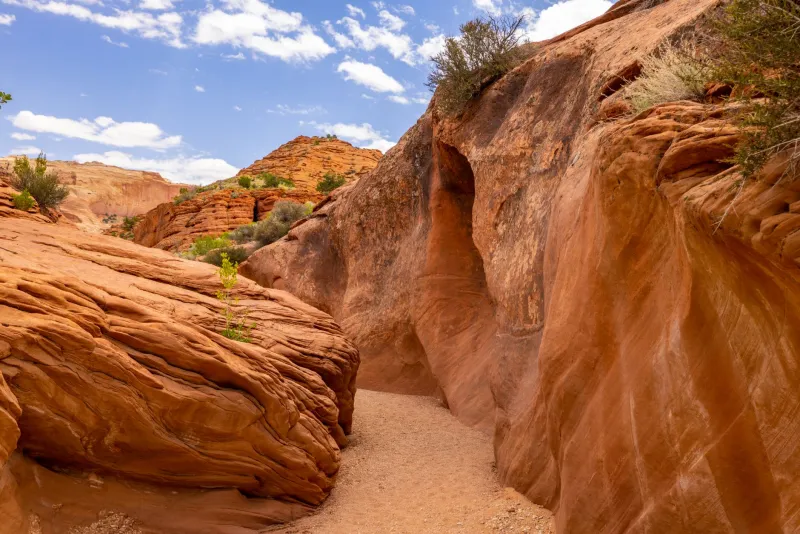
There's a photo that keeps circulating on social media every spring. A line of hikers — sometimes dozens deep — snaking through the narrow walls of Peek-a-Boo Slot Canyon, headlamps bobbing, everyone waiting their turn to squeeze through the same iconic squeeze. It's a stunning shot. It's also a pretty good argument for taking a different trail.
Grand Staircase-Escalante National Monument draws somewhere north of 800,000 visitors a year now, a number that has roughly doubled over the past decade. The Bureau of Land Management doesn't publish granular trail-by-trail counts, but rangers and outfitters on the ground will tell you the same thing: the crowds are real, they're concentrated, and they're not going away anytime soon.
The good news? This monument covers nearly 1.9 million acres. The math alone should tell you there's plenty of room to disappear.
Where the Crowds Actually Are
Before you can dodge the masses, it helps to know exactly where they pile up. The congestion in Grand Staircase-Escalante follows a pretty predictable pattern — it clusters around trailheads accessible from Highway 12 and Hole-in-the-Rock Road, and it peaks hard between late March and early June, then again in September and October.
The usual suspects:
- Peek-a-Boo and Spooky Slot Canyons off Dry Fork Road see some of the heaviest foot traffic in the entire monument. On a busy spring Saturday, the parking area fills before 9 a.m.
- Coyote Gulch, arguably the monument's crown jewel, draws backpackers from across the country. The Hurricane Wash and Red Well trailheads see the most use, and popular campsites near Jacob Hamblin Arch can feel like a campground.
- Lower Calf Creek Falls is essentially a monument institution at this point. The 5.5-mile round trip is well-maintained, well-signed, and well-loved — sometimes overwhelmingly so.
- The Wave sits just outside monument boundaries in the Vermilion Cliffs, but its overflow effect is real. Visitors denied a Wave permit often redirect toward Escalante's slot canyons, adding to already-stretched trailhead capacity.
None of this makes these places bad. They're popular for genuine reasons. But if your goal is solitude, you need a different game plan.
Timing Is Half the Battle
The single most effective crowd-avoidance strategy costs you nothing: adjust when you go.
Weekdays over weekends — obvious, but worth repeating. Trail use on peak Saturdays in May can run three to four times higher than a Tuesday in the same week. If your schedule has any flexibility at all, mid-week visits make a dramatic difference.
Early starts beat everything. At Calf Creek, arriving by 7:30 a.m. on a summer morning means you'll have long stretches of trail to yourself. By 10 a.m., it's a different story. The slot canyons off Dry Fork are similar — early risers get the good light and the quiet.
Shoulder season over peak season. Late October through early November is quietly one of the best times to visit. The summer heat is gone, the fall color in the cottonwoods along canyon floors is legitimately gorgeous, and the crowds thin considerably. February and early March carry weather risk — flash flood season hasn't fully arrived, but cold nights and muddy roads are real factors — but the solitude can be extraordinary.
The Alternatives Worth Knowing
Here's where it gets interesting. Within a few miles of the monument's most trafficked spots, there are routes that see a fraction of the foot traffic for comparable — sometimes superior — scenery.
Egypt Trailhead and the Escalante River Corridor — Most visitors access Coyote Gulch from the north. The Egypt trailhead on the southern end sees dramatically less use and offers a longer, more committing approach that filters out casual day-hikers. The trade-off is distance and navigation complexity, but the reward is space.
Fortymile Ridge — Running south from Hole-in-the-Rock Road, Fortymile Ridge offers sweeping canyon views and access to the Escalante River drainage without the concentrated use of Coyote Gulch. It requires route-finding comfort and solid map skills, but it rarely disappoints those willing to put in the effort.
Upper Hackberry Canyon — On the Cottonwood Canyon Road side of the monument, Hackberry Canyon is a multi-day gem that sees only a sliver of the attention Coyote Gulch receives. It's longer to access, involves some stream crossings, and doesn't have the same social media profile — which is precisely the point.
Steep Creek and the Escalante Natural Bridge area — A shorter day hike option that often gets overlooked by visitors fixated on the big-ticket slot canyons. The natural bridge is genuinely impressive, the trail involves some route-finding, and you're unlikely to share it with more than a handful of other people on most days.
Practical Strategies That Actually Work
Beyond timing and trail selection, a few tactical moves can meaningfully improve your experience even on the busier routes.
Camp farther from the trailhead. In Coyote Gulch, most congestion clusters within the first few miles of popular entry points. Backpackers willing to push deeper into the canyon — past Jacob Hamblin Arch toward Crack-in-the-Wall or the Escalante River confluence — often find themselves essentially alone.
Have a backup plan. Download offline maps before you leave cell range and identify two or three alternative trailheads within reasonable driving distance of your primary destination. If the Peek-a-Boo parking area is full when you arrive, knowing that Zebra Slot Canyon or the Harris Wash trailhead are reasonable pivots saves the day.
Talk to rangers. The Escalante Interagency Visitor Center on Main Street in Escalante is genuinely useful. Rangers there track conditions and use patterns, and they'll tell you honestly which areas are getting hammered and which are quiet. It takes ten minutes and it's free.
Embrace the road conditions. Many of the monument's lesser-visited trailheads require high-clearance vehicles and some comfort with unpaved roads. Visitors who filter themselves out at the idea of a dirt road are, unintentionally, doing you a favor. A capable vehicle opens up a substantial percentage of the monument's quieter corners.
The Honest Trade-Off
There's no pretending that the hidden gems stay hidden forever. Every article like this one, every trail recommendation shared on a hiking forum, nudges use toward places that were quiet specifically because no one was writing about them. It's a real tension, and it's worth sitting with.
The best answer, imperfect as it is, is to go prepared, leave no trace with genuine commitment, and spread your own use across multiple areas rather than hammering one spot repeatedly. The monument can absorb a lot of visitors when they're distributed thoughtfully. It struggles when they all show up at Peek-a-Boo on a Saturday in May.
Grand Staircase-Escalante is still one of the least-developed, most rewarding wild places in the American Southwest. The crowds are real, but so is the wilderness. You just have to be willing to look a little harder for it.