Canyon Country Survival: Real Dangers in Grand Staircase-Escalante and How to Handle Them
Let's be straight with you: Grand Staircase-Escalante is not a theme park. There are no guardrails, no rangers stationed every quarter mile, and in vast stretches of this nearly two-million-acre monument, your cell phone is about as useful as a decorative paperweight. That's part of the magic, honestly. But it also means the wilderness here plays by its own rules — and those rules can get serious fast.
This isn't meant to scare you off. Thousands of hikers explore this canyon country every year and come home with nothing worse than sore legs and a sunburn they're proud of. The difference between them and the visitors who end up in trouble almost always comes down to preparation and awareness. So let's talk about what's actually waiting out there — and how you deal with it.
Flash Floods: The Danger You Won't See Coming
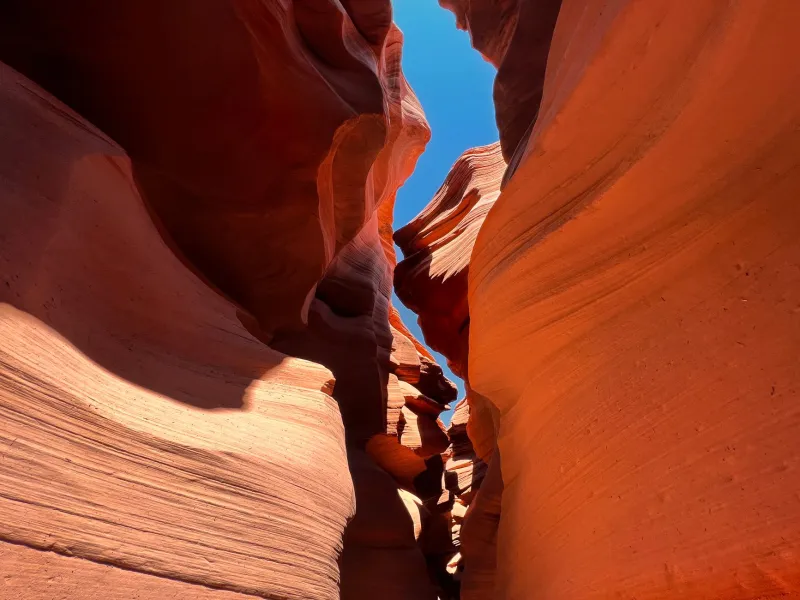
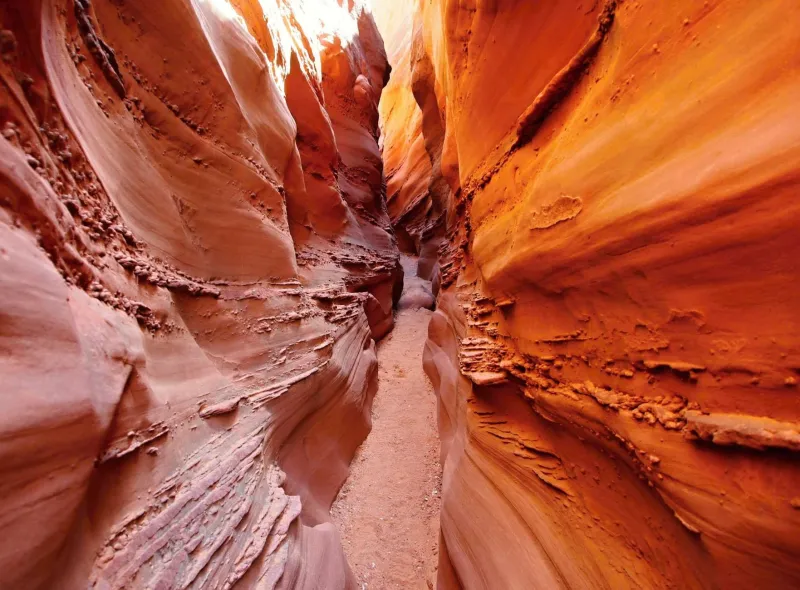
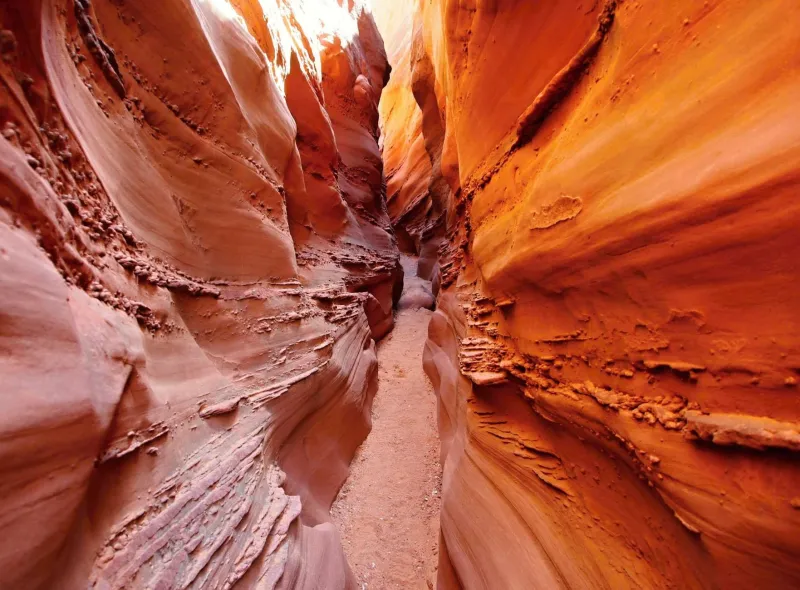
Ask any experienced Escalante hiker what keeps them up at night, and flash floods will be at the top of the list. What makes them so treacherous isn't just the force of the water — it's the timing. A slot canyon can be bone dry and sunny overhead while a thunderstorm twenty miles away is dumping water into the same drainage system. That water funnels through the canyon network at terrifying speed, and you may have almost no warning before a wall of debris-filled water rounds the bend.
The critical thing to understand is that you need to check weather conditions for the entire watershed, not just your immediate location. Before entering any slot canyon — Peek-a-Boo, Spooky, Zebra, or otherwise — pull up the National Weather Service forecast for the broader region and look for any thunderstorm activity within roughly a 30-mile radius of your planned route. Many experienced canyoneers extend that check to 50 miles.
What to do:
- Check weather forecasts the morning of your hike, not the night before
- Identify escape routes before you enter a confined canyon — look for ledges, pour-off exits, or widening sections where you could climb above flood level
- If you hear a roaring sound, feel the ground vibrate, or notice the water in a stream suddenly turning muddy, move to high ground immediately — don't wait to confirm what it is
- Avoid slot canyons entirely during afternoon hours in monsoon season (roughly July through September), when convective storms build fast
A good gear addition: a waterproof pack cover and dry bags for your electronics and food. In a flooding scenario you may be climbing fast, and the last thing you want is to lose your navigation tools to water damage.
Heat and Dehydration: The Slow Creep That Catches Smart People Off Guard
Heat illness in the Utah desert doesn't always announce itself dramatically. It tends to progress quietly — a mild headache you chalk up to the altitude, a little fatigue you blame on the mileage, confusion that arrives so gradually you don't recognize it as a symptom until things are already going sideways.
The Escalante backcountry sits at elevations ranging from roughly 3,600 to over 7,000 feet, and the exposed canyon floors can hit temperatures well over 100°F in summer. Direct sun reflects off sandstone walls and amplifies that heat further. A hiker who sets out at 7 a.m. in comfortable conditions may find themselves in a very different situation by noon.
The progression to watch for:
- Thirst, mild headache, decreased urine output — early dehydration, still very manageable
- Dizziness, nausea, muscle cramps, skin that's hot and dry — heat exhaustion, requires immediate shade and hydration
- Confusion, slurred speech, loss of coordination — heat stroke, a medical emergency
The standard advice is one liter of water per hour of strenuous activity in hot conditions, but many hikers underestimate how strenuous canyon scrambling actually is. Carry more than you think you need and add an electrolyte supplement (Nuun tablets or similar) to replace sodium lost through sweat. Relying on water sources in the backcountry is risky — springs and potholes can dry up seasonally, so treat every water cache as a bonus, not a plan.
Hike early, rest in shade between roughly 11 a.m. and 3 p.m., and take the heat seriously even if the sky looks beautiful.
Rattlesnakes and Scorpions: Common Sense Over Panic
Grand Staircase-Escalante is home to the Great Basin rattlesnake and, in lower desert elevations, the Midget Faded rattlesnake. You're also likely to encounter scorpions, particularly if you're camping and moving gear around in the dark. Neither of these animals is out to get you — bites almost always happen because someone gets too close, reaches into a crevice without looking, or steps where they can't see.
Practical habits that dramatically reduce risk:
- Use trekking poles to probe ahead in brush and rocky areas before stepping
- Never reach into a crack or under a rock without looking first
- Shake out boots, clothing, and sleeping gear every morning before putting them on
- Use a headlamp when moving around camp after dark — scorpions are nocturnal
- Step on top of logs and rocks rather than over them, so you can see what's on the other side
If you are bitten by a rattlesnake, stay calm, immobilize the affected limb, and get to medical care as quickly as possible. Do not cut, suck, or apply a tourniquet — that's outdated advice that causes more harm. Carry a satellite communicator (more on that below) so you can call for help from anywhere in the monument.
Navigation Without Cell Service: Don't Wing It
Large portions of Grand Staircase-Escalante have zero cell coverage — not spotty coverage, zero. Trails here are often unmarked, cairns get knocked over or are misleading, and the canyon terrain makes it genuinely easy to get turned around. GPS apps like Gaia GPS or CalTopo loaded with offline maps are invaluable, but they require a fully charged device. Bring a backup battery pack and download your maps before you leave the trailhead.
Better yet, carry a paper topo map and a compass and know how to use them. It sounds old-fashioned, but it's the kind of old-fashioned that keeps people alive.
A personal locator beacon (PLB) or satellite messenger like a Garmin inReach is arguably the single most important piece of safety gear you can bring into the Escalante backcountry. It costs nothing to use in an emergency and could be the difference between a rescue and a tragedy.
The Bottom Line
The hazards in Grand Staircase-Escalante are real, but they're not random. Flash floods follow weather patterns you can track. Heat illness follows a predictable progression you can interrupt. Wildlife encounters follow behavioral patterns you can avoid. And getting lost is largely a function of preparation you can control.
The canyon country here is extraordinary precisely because it's wild and unmanaged. Come prepared, stay humble, and you'll have the kind of experience that stays with you for the rest of your life — in the best possible way.